Sunday, August 26, 2007

List Group Label Strategy

The List/Group/Label strategy offers a simple three-step process for students to organize a vocabulary list from a reading selection. This strategy stresses relationships between words and the critical thinking skills required to recognize these relationships.

List/Group/Label challenges students to . . .
  • List key words (especially unclear and/or technical terms) from a reading selection.
  • Group these words into logical categories based on shared features.
  • Label the categories with clear descriptive titles.
Steps to List/Group/Label:
  1. Select a main topic or concept in a reading selection.
  2. Have students list all words they think relate to this concept. Write student responses on the whiteboard.
  3. Divide the class into groups of 3 or 4 students. Have these teams join together related terms from the larger list. Have the teams provide "evidence" for this grouping—that is, require the students to articulate the common features or properties of the words collected in a group.
  4. Ask the student groups to suggest a descriptive title or label for the collections of related terms. These labels should reflect the rationale behind collecting the terms in a group.
  5. Finally, have students read the text selection carefully and then review both the general list of terms and their collections of related terms. Students should eliminate terms or groups that do not match the concept's meaning in the context of the selection. New terms from the reading should be added, when appropriate. Terms should be "sharpened" and the groupings and their labels revised, when necessary.
An alternative use of this strategy is for the teacher to provide the list of terms or vocabulary words for the students to organize. Then students can speculate about the topic to be read. These word lists can be copied on card stock for easier manipulation.

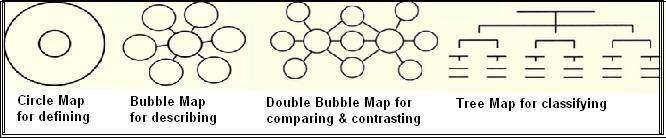
The finished, labeled categories can be presented in a tree map since the tree map is for classifying details and grouping ideas.

Using the List/Group/Label strategy develops critical thinking abilities and uses motivation to increase comprehension. The strategy engages students by building their curiosity and allowing them to activate their prior knowledge. Hilda Taba created this strategy because of people's interest in inductive thinking, making generalizations based on specifics. This cognition strategy is also based on Jerome Bruner's research on how people learn, organize and retain information.

Some teachers may feel that they need to teach all of the word definitions for students to be successful with this strategy; however, not knowing all of the definitions also adds to a student's curiosity and guessing definitions may increase student enjoyment in the task.

Math teachers have found success with this strategy when they have students List/Group/Label various terms, expressions and symbols.

Bryonn Bain: Hip Hop in the Classroom

photo from bryonnbain.com


Bryonn Bain, who has joined the National Urban Alliance as its Artist-in-Residence, is Brooklyn's Famed Spoken Word Poet. Bain currently teaches at Columbia University and at Riker's Island Prison. Bain first came into the national spotlight when he was falsely imprisoned by the NYPD during his second year at Harvard Law School. Following his false imprisonment, Bain wrote the article "Walking While Black" for The Village Voice, and that article earned him a Mike Wallace interview on 60 Minutes.

For more information about Bryonn, visit his website bryonnbain.com.

Bain proposes that it is important for teachers today to connect to teenagers through music, and since the music that many teens, regardless of their cultural backgrounds, listens to is Hip Hop, teachers should be incorporating Hip Hop into their lessons. In fact, Bain asserts that 70% to 80% of Hip Hop consumers are white, suburbanites. Bain, in a WMEP/NUA Reunion class on March 7, 2007, cautioned the teachers present not to be racist in their critique of Hip Hop.

During the NUA Hip Hop session, Bain briefly lectured on the components of Hip Hop--the DJ, the graffiti artist, the B-Boy or B-Girl breakdancer, and the emcee (also known as the spoken word poet or rap artist). Many people think of Hip Hop only as the rap portion of the Hip Hop culture. Bain claims, "Rap is something you do; Hip Hop is something you live."

Bain proposes that teachers use Hip Hop in the classroom not only as text to analyze, but also teachers should have students create their own Hip Hop. Creating Hip Hop works especially well in history classes because Hip Hop can tell the story of a historical event. Besides connecting to youth culture, teachers who employ Hip Hop in the classroom will be promoting creativity and discovery, using rhythm, rhyme and repetition to enhance memory and verbal skills, and they will be allowing listening and dancing to release student stress.

Bain's Hip Hop lesson ideas have been greatly influenced by Paulo Freire's Pedagogy of the Oppressed. For an excerpt of Freire's book and a look into his educational philosophy, click here.

James McBride, author of The Color of Water, would most likely agree with Bain's assessment because McBride discussed the importance of Hip Hop in the world today in the April 2007 issue of National Geographic. McBride's article traces Hip Hop back to its African roots and proposes that music is a great equalizer among people.

NUA Culture Consultant Augusta Mann holds a similar view that teen culture today has its basis in African American culture.

Final Word Protocol

The CoP will be conducting a Final Word Protocol text-based discussion on a chapter by Baruti Kafele. Basically, a Final Word Protocol involves a group of four or five students responding to quotations that they found of particular interest in an assigned reading. The timed discussion allows for only one person to be speaking at a time, and the listeners must respond to specific comments made by the first speaker. Click here for a handout on Final Word Protocol instructions.

The Final Word Protocol forces all students/participants to listen carefully to the speaker because they need to respond to the speaker's comments. Often times people are thinking about what they will say when it's their turn to speak rather than listening to the speaker. Since all students must discuss the assigned text, students are more likely to read the assignment and be prepared because of peer pressure.

The Final Word Protocol is a culturally responsive strategy because all students are allowed to share their perspective.

If you use the Final Word Protocol in your classroom, be sure to click comments below to discuss the strengths and weaknesses of this strategy.

NUA Principles of Learning

Many principles of learning underlie NUA's work. The following five are particularly useful because they are relevant across the full range of grade levels and content areas:

  1. Students must bring their own perspectives to lessons so that they will see the relevance of the content to their own lives.
  2. Students must make thoughtful and active use of their prior knowledge in order to learn new information.
  3. Students need challenges to keep them motivated and engaged in learning.
  4. Students need opportunities to talk to each other to construct, process, and reflect on meanings while hearing and appreciating one another's points of view.
  5. Students need to represent their learning in interesting and creative ways that enhance their comprehension and retention.

Cognitive Coaching Ideas

The Community of Practice (CoP) watched the seven-minute video clip featuring Robert Price and Yvette Jackson in a cognitive coaching session. After sharing information about the video clip in their small groups, the CoP created the following list of cognitive coaching and Thinking Map applications for Edina High School:

  1. Special Education could use to establish IEP goals and expected behaviors.
  2. Administrators and teachers could use to discuss behavior issues.
  3. Administrators could use in a pre-conference before teacher observations.
  4. Teachers could use in a student writing conference.
  5. The school nurse could use to explain procedures and to discuss health issues with students.
  6. Cognitive coaching can be used to build relationships with students.
  7. Administrators and teachers could use in conferences with parents.
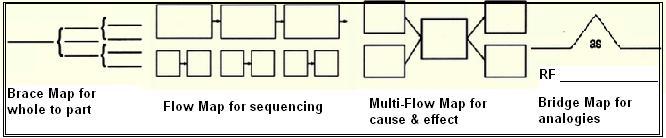
  8. Meeting and classroom agendas can be given in a flow map.

During our discussion some concerns were raised about the reduced amount of eye contact and the distraction teachers might feel when they are concerned about what is being written down. Some of these concerns can be alleviated though when understanding that Cognitive Coaching/discussions with Thinking Maps do take out some of the emotion and force the coach to be a more active listener. Also, teenagers may find that making a Thinking Map during a behavior conference may keep them occupied and not worry about the reduced eye contact.

EHS Community of Practice Norms

During the first meeting together, the NUA Community of Practice developed the following norms:

Members will respect and affirm each other's ideas.

Members will respect each other's time by attending meetings.

Members will explore the research behind and the implementation process of NUA strategies.

Members will address applications outside the classroom for NUA strategies.

Members will communicate comments and findings at http://www.edinanua.blogspot.com/.