To watch the apnea-free Jeremy flex his neck muscles, click here.
Wednesday, August 29, 2007
Anticipation Guide
To watch the apnea-free Jeremy flex his neck muscles, click here.
Labels:
anticipation guide,
cognition,
language strategies,
reading
Tuesday, August 28, 2007
Thinking Maps with Gifted and Talented Students
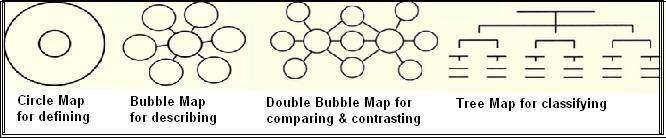
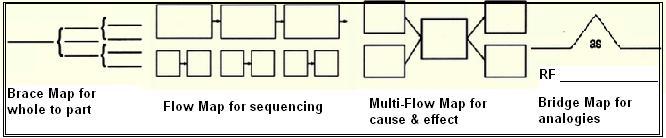
Much of the research about the effectiveness of Thinking Maps has been conducted on underachieving students. However, The Thinking Maps Foundation does offer grants to educators who wish to study the effectiveness of the maps. One study, conducted on Gifted and Talented high school students, found that students involved in the school's Thinking Map project, did improve their SAT scores one complete level. A brief sampling from the study is below. The complete 34-page study is available from Thinking Maps Foundation.
"Fifty Gifted and Talented (G&T) learners from Birchwood Community High School were involved in the project, alongside five learners from year 3 G&T from years of Gorse Covert Primary School. Staff and learners from Birchwood Primary School
were also involved in the training and piloting of Thinking Maps although they removed themselves from the final research outcomes.
We identified G&T learners in line with our respective G&T policies (please refer to
appendices) Bob Burden’s NFER questionnaire Myself As a Learner Scale (MALS)
was used to base line the academic self concept of our G&T cohorts.
Birchwood Community High (BCHS) and Gorse Covert Primary school conclude that
Thinking Maps were an effective tool in raising the quality of pupils thinking and
planning. On average BCHS learners improved their SAT scores by one complete
level. Gorse Covert Primary School learners demonstrated that they were able to
organise and sustain their writing through the usage of Thinking Maps."
Monday, August 27, 2007
NUA EHS CoP Members
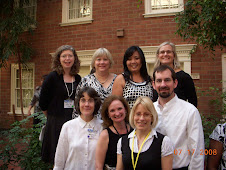
At EHS 43 staff members have studied NUA strategies through either a cohort or the Community of Practice. Many others have incorporated NUA strategies learned at staff development days or from teachers on their course-alike teams.
The following staff members make up the 2007-08 Community of Practice:
Elizabeth Barniskis
Chis Dalki
Rob Gardner
Ruth Mary Gens
Jim Hatten
Heidi Howard
Sarah Jarrett
Ann Little
Eric Nelson
Betsy Nimmo
Jackie Roehl
Rachel Tholen
Brian Simpson
Sarah Striffler
KC West
Scott Woebler
The following staff members make up the 2007-08 Community of Practice:
Elizabeth Barniskis
Chis Dalki
Rob Gardner
Ruth Mary Gens
Jim Hatten
Heidi Howard
Sarah Jarrett
Ann Little
Eric Nelson
Betsy Nimmo
Jackie Roehl
Rachel Tholen
Brian Simpson
Sarah Striffler
KC West
Scott Woebler
EHS NUA Cohort Members
Cohort I (at Valley View)
Pat Corcoran
Diane Daniels-Stromberg
Joel Nasset
Cohort II
Martha Cosgrove
Ruth Mary Gens
Josh Grenier
Mary Manderfeld
Colleen Raasch
Jackie Roehl
Dalen Towne
Meggie Trenda
Cohort III
Barb Anderson
David Boone
Elizabeth Barniskis
Heidi Mathers
Carolyn Ocampo
Bob Schneider
Cohort IV
Arne Bolstad
Kim Caster
Natalia Kissock
Jeff Mace
Ellen Mundt
Chris Dalki
Claris Springob
KC West
Jane Yanda
Cohort V (starting this year)
Sarah Jarrett
Jenn Carter
Eric Nelson
Jenn Cordes
Elizabeth Neary
Amanda Koehler
Kurt Hunter
Scott Woelber
Rachel Tholen
Emese Pilgrim
Ann Little
Jackie Roehl
Kristin Benson
Pat Corcoran
Diane Daniels-Stromberg
Joel Nasset
Cohort II
Martha Cosgrove
Ruth Mary Gens
Josh Grenier
Mary Manderfeld
Colleen Raasch
Jackie Roehl
Dalen Towne
Meggie Trenda
Cohort III
Barb Anderson
David Boone
Elizabeth Barniskis
Heidi Mathers
Carolyn Ocampo
Bob Schneider
Cohort IV
Arne Bolstad
Kim Caster
Natalia Kissock
Jeff Mace
Ellen Mundt
Chris Dalki
Claris Springob
KC West
Jane Yanda
Cohort V (starting this year)
Sarah Jarrett
Jenn Carter
Eric Nelson
Jenn Cordes
Elizabeth Neary
Amanda Koehler
Kurt Hunter
Scott Woelber
Rachel Tholen
Emese Pilgrim
Ann Little
Jackie Roehl
Kristin Benson
Final Word Strategy Notes
During the debrief the Final Word on Baruti Kafele's "Managing Your Classroom," CoP members came up with the following ideas:
The Final Word strategy allows all students to speak, creating an equality of cultures. The strategy allows all ideas to be affirmed, and the sense of order is a classroom management tool itself.
Discussing Kafele's ideas sparked a lively discussion from "we resist rigid classroom management" to "we still struggle with managing a classroom." KC shared her three classroom rules: Work, Respect, Belong. The group liked the idea of keeping rules vague since teachers can't predict all of the infractions.
Jackie's Note: Although many folks were turned off by some of the specific ideas that Kafele proposes, the animated discussion and comments such as "I've always been afraid to talk about classroom management issues" and "The faculty needs to have a larger discussion of rules for consistency across classes" made the 25 minutes valuable for me. Thanks for your great discussion.
The Final Word strategy allows all students to speak, creating an equality of cultures. The strategy allows all ideas to be affirmed, and the sense of order is a classroom management tool itself.
Discussing Kafele's ideas sparked a lively discussion from "we resist rigid classroom management" to "we still struggle with managing a classroom." KC shared her three classroom rules: Work, Respect, Belong. The group liked the idea of keeping rules vague since teachers can't predict all of the infractions.
Jackie's Note: Although many folks were turned off by some of the specific ideas that Kafele proposes, the animated discussion and comments such as "I've always been afraid to talk about classroom management issues" and "The faculty needs to have a larger discussion of rules for consistency across classes" made the 25 minutes valuable for me. Thanks for your great discussion.
Closing the Gap by Connecting Culture, Language and Cognition
Below is a brief summary of "Closing the Gap by Connecting Culture, Language, and Cognition" from Student Successes with Thinking Maps. Click on "post a comment" at the end of this entry to comment on the full article.
Yvette Jackson, the Executive Director of the National Urban Alliance, hopes to change teacher perceptions about underachieving students. NUA also hopes to bridge the cultural gap between students and teachers. Jackson and NUA believe that a shift needs to occur from what has to be taught (content) to how learning happens (process).
NUA believes in the following equation:
Learning = (Understanding + Motivation) (Competence and Confidence)
NUA believes that Thinking Maps are "essential tools in bridging the cultural gap between teachers and students" because they address the inter-related nature of culture, language and cognition.
NUA does acknowledge that Thinking Maps are one tool to give teachers a language to address the needs of underachieving students because they help eliminate textual blockers, both semantic and structural blockers. This mediation happens because Thinking Maps provide a clear language to discuss metacognition, and the maps become external memory patterns for students.
Thinking Maps are a common language that can be transferred across disciplines and grade levels.
Yvette Jackson, the Executive Director of the National Urban Alliance, hopes to change teacher perceptions about underachieving students. NUA also hopes to bridge the cultural gap between students and teachers. Jackson and NUA believe that a shift needs to occur from what has to be taught (content) to how learning happens (process).
NUA believes in the following equation:
Learning = (Understanding + Motivation) (Competence and Confidence)
NUA believes that Thinking Maps are "essential tools in bridging the cultural gap between teachers and students" because they address the inter-related nature of culture, language and cognition.
NUA does acknowledge that Thinking Maps are one tool to give teachers a language to address the needs of underachieving students because they help eliminate textual blockers, both semantic and structural blockers. This mediation happens because Thinking Maps provide a clear language to discuss metacognition, and the maps become external memory patterns for students.
Thinking Maps are a common language that can be transferred across disciplines and grade levels.
Labels:
cognition,
culture,
language strategies,
NUA Staff
Subscribe to:
Posts (Atom)