KC West has been using the idealistic leader traits as community builders in her English 10 classroom. Each week she has presented a different trait and students have worked on defining the traits, either with a circle map or an A to Z taxonomy.
Not only have these discussions of idealist traits helped KC build relationships with her students, but also students have reported that they have used information from classroom discussions outside of class, even at job interviews.
The idealistic leader traits from Admission Possible are:
"Strive to be DELIGHTFUL!
ENERGIZE those in your presence.
Keep your EYES ON THE PRIZE.
CHALLENGE CYNICISM whenever you encounter it.
MOCCASIN the lives of others. Imagine life in someone else's moccasins.
Learn to be GRATEFUL.
HAVE FUN!"
Visit Admission Impossible for more information on the Idealistic Leader Traits.
Tuesday, May 6, 2008


Tuesday, April 8, 2008
Metacognitive Frames and Peer Support
KC West had great success having students explore a novel's characters and their motivations through metacognitive frames. The students found the frames engaging, and one student even commented, "These are fun--like Mad Libs."
KC was pleased with the assignment because is was naturally differentiated. One student could simply write a word in the blanks of the frames, while another student might write detailed phrases. All students could successfully showcase something that they new about the characters in the novel.
KC's Enriched English 10 students were analyzing the characters in Cormac McCarthy's All the Pretty Horses, and here are the frames that students used:
Blevins is a ________ who __________.
Above all else, Rawlins wants ___________, and so he _________________.
John Grady values ______________, so he ________________.
I was so impressed with the student work that KC displayed after this exercise, that I tried a metacognitive frame in my World Literature class this week. As a priming activity for Shakespeare's Othello, I had students complete the following frame:
Relationship Advice
The important thing to know is that __________ screws up a relationship because ______________. When this happens, I feel ____________ and ____________. Therefore, to prevent this relationship obstacle I __________________.
After students completed the frame with their own ideas, I had them complete a second frame from another person's point of view. I used the peer support strategy where students chose a laminated picture of a famous person and then wrote their relationship advice on a speaking bubble. Since I wanted to give each hour the chance to use some of their favorite stars, I simply taped the frame bubbles to a "relationship advice" poster after the end of each hour.
KC was pleased with the assignment because is was naturally differentiated. One student could simply write a word in the blanks of the frames, while another student might write detailed phrases. All students could successfully showcase something that they new about the characters in the novel.
KC's Enriched English 10 students were analyzing the characters in Cormac McCarthy's All the Pretty Horses, and here are the frames that students used:
Blevins is a ________ who __________.
Above all else, Rawlins wants ___________, and so he _________________.
John Grady values ______________, so he ________________.
I was so impressed with the student work that KC displayed after this exercise, that I tried a metacognitive frame in my World Literature class this week. As a priming activity for Shakespeare's Othello, I had students complete the following frame:
Relationship Advice
The important thing to know is that __________ screws up a relationship because ______________. When this happens, I feel ____________ and ____________. Therefore, to prevent this relationship obstacle I __________________.
After students completed the frame with their own ideas, I had them complete a second frame from another person's point of view. I used the peer support strategy where students chose a laminated picture of a famous person and then wrote their relationship advice on a speaking bubble. Since I wanted to give each hour the chance to use some of their favorite stars, I simply taped the frame bubbles to a "relationship advice" poster after the end of each hour.

During the gallery walk to read all of the famous people bubbles, students commented that they enjoyed the activity and hope we use the famous people more often. I wanted to introduce peer support with the Othello unit because I feel that the class will be able to have richer discussions about the racial issues that arise in the play when the feelings can be coming from Hilary Duff, OJ Simpson, Patrick Dempsey, Britney Spears, Mary Kate and Ashley Olsen, Oprah, Barack Obama, Dennis Rodman, etc.
More information on metacognitive frames can be found in Writing as Learning by Andrew Rothstein, Evelyn Rothstein and Gerald Lauber.
Tuesday, March 18, 2008
Who What When Where and How
The Who What When Where and How strategy engages students by tapping into youth culture and Hip Hop. Basically, students write a four-beat song to demonstrate their thinking on a particular topic.
Chorus: (all students sing)
Who, What, When, Where and How
Who, What, When, Where and How
Verse: (individuals or groups of students sing--see sample below)
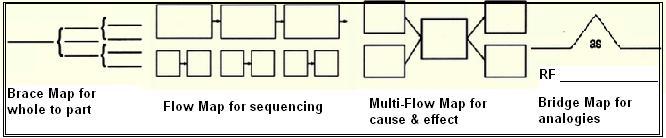
In World Literature I employed this strategy to make their setting brace map come to life. Student groups were assigned a setting in The Handmaid’s Tale. They dissected the setting description to come up with people (cast), props (objects) and infrastructure (scenery). Those were the main brace map parts, and students dissected those main parts into the sub-parts of concrete nouns that would appear in those areas of the brace map if they were directing a play of the book.
From the brace map students easily wrote the Who What When Where and How song. Here’s an example of a verse hanging on my student Hall of Fame from The Handmaid’s Tale for Offred’s bedroom.
WHO: Offred Alone
WHAT: She lives simply
WHEN: Most of the time
WHERE: A Tiny Room
HOW: Forced to Remain
Each line has four beats. I lined up a singing volunteer from each group in front of the room so that the students could sing the story. The entire class sang the chorus between each verse. The chorus is just Who, what, when, where and how repeated twice. The entire class also did a call and response, calling out who, and letting the appropriate singer answer.
This day was met with mixed reviews from "one of the best classes ever" to "I am not going to sing."
Chorus: (all students sing)
Who, What, When, Where and How
Who, What, When, Where and How
Verse: (individuals or groups of students sing--see sample below)
In World Literature I employed this strategy to make their setting brace map come to life. Student groups were assigned a setting in The Handmaid’s Tale. They dissected the setting description to come up with people (cast), props (objects) and infrastructure (scenery). Those were the main brace map parts, and students dissected those main parts into the sub-parts of concrete nouns that would appear in those areas of the brace map if they were directing a play of the book.
From the brace map students easily wrote the Who What When Where and How song. Here’s an example of a verse hanging on my student Hall of Fame from The Handmaid’s Tale for Offred’s bedroom.
WHO: Offred Alone
WHAT: She lives simply
WHEN: Most of the time
WHERE: A Tiny Room
HOW: Forced to Remain
Each line has four beats. I lined up a singing volunteer from each group in front of the room so that the students could sing the story. The entire class sang the chorus between each verse. The chorus is just Who, what, when, where and how repeated twice. The entire class also did a call and response, calling out who, and letting the appropriate singer answer.
This day was met with mixed reviews from "one of the best classes ever" to "I am not going to sing."
Monday, March 17, 2008
The Bubble Map Was Just the Beginning
A recent American Literature assessment involved students using a bubble map as the first step of a character analysis assignment. The assessment extended the student's thinking beyond the bubble map to first a creative product and then to a written reflection.
Here is the description of the assessment from the student direction sheet:
Goals of the assessment:
You must complete the following pre-writing preparation:
Here is the description of the assessment from the student direction sheet:
Goals of the assessment:
- To demonstrate a sophisticated, in-depth understanding of the relationship between character motivation and themes in The Great Gatsby.
- To apply contemporary modes of expression to this novel of the 1920s.
- To flex your creative muscles. This is your opportunity to express your ideas in a creative format.
Final Work Product:
You will create either character recipes, Facebook pages, postcard secrets, or web logs for three of the main characters in The Great Gatsby. Your creative representations of the characters should reflect in-depth analysis of each character’s development throughout the course of the novel. Consider how these characters have or have not achieved the American Dream. Make sure you do not focus all of your efforts on creativity at the expense of meaningful analysis.You must complete the following pre-writing preparation:
- Select three main characters from The Great Gatsby.
- For each character, create a bubble map with at least 10 adjectives that describe your character. Consider social, emotional, psychological and physical aspects of the character.
- In the frame, for each adjective, provide a description of events or forces from the text that help to shape the character. Include at least 5 direct passages from the novel. For longer passages you may cite the beginning phrase and last phrase of the passage along with the page number.
Next, choose one of the following options for a final product:
Option 1: Character Recipe Cards
Writing the Recipe:
For each character, create a “recipe” that combines your character traits and bakes them into your character. The list of ingredients should include the character’s traits, and baking instructions should show how the plot events help shape the character. You must use at least 5 vivid, concrete verbs in baking instructions.
Revising: Stir. Add ingredients. Checks to make sure instructions are clear and in logical order. Stir some more and check appropriateness of verbs in baking instructions. Also, proofread recipe for spelling errors. Once you have it completely right, prepare your recipe for publication.
Publication:
Write out the complete recipe on a 4 x 6 note card. Decorate the card with symbols and images appropriate for this character.
Sample Recipe: Tragic Romeo Rolls
1 cup passion
½ cup anger
5 tablespoons love
1 teaspoon regret
2 pints confusion
3 pinches of family feuding
¼ cup revenge
4 drops blood red food coloring
Directions:
Gather all ingredients. Start with passion and love and mix family feuding deep into the middle of it. Beat until well blended. Heat the ½ cup of anger until it comes to a boil. Pour into the mixture. Next add the ¼ cup of revenge and stir until clumpy. Then stir confusion throughout the mixture. Pour into baking tins. Set oven at a searing 450 degrees. Bake overnight. After baking, top with seasoned regret, stain red with food coloring.
Result: One confused, and ultimately regretful, young lover.
Serves: Two wretched families who eventually learn to eat “Tragic Romeo Rolls” and “Passionate Juliet Cobbler” peacefully together.
Option 2: Facebook pages
For each character, create a Facebook page. As you create your page for each character, remember that you are trying to show your insights into this character’s development throughout the novel. Your page should portray an accurate overall representation of what this character would do, say, or think. What are the crucial conflicts and ethical dilemmas that this character faces?
Your pages need to show careful consideration of character motivation, relationships, and conflicts. Think about elements that will highlight personality well. Also think about appropriate symbolic images that you may wish to include.
Format these appropriately, either by creating the pages online and printing them or mimicking the format in your written work.
Option 3: Character Postcard secrets
Check out the website http://www.postsecrets.com/ (Warning: There are some very provocative confessions on this website.) This is a website that allows real people to offer confessions and secrets anonymously. Your mission is to create a postcard secret for three of the main characters in The Great Gatsby. Each postcard must include images and text.
Here are the rules, as detailed on the Post Secret website: “Each secret can be a regret, hope, funny experience, unseen kindness, fantasy, belief, betrayal, desire, feeling, confession, or childhood humiliation. Reveal anything—as long as it is true and you have never shared it with anyone before.”
Create a 4 x 6 postcard but stick to one secret per card. Choose secrets that fit the characters as developed in the novel and that are appropriate for a classroom setting. Put your complete secret and image on one side of the postcard. Be brief, legible, and creative. On the back of each postcard, write a paragraph, from the perspective of the character, that explains how or why the confession of this secret is vital to your existence. Using passages from the novel would strengthen these paragraphs.
Option 4: Character Blogs
Create a blog that includes a dialogue among at least 3 of the main characters in The Great Gatsby. You should write from the first-person perspective of the characters. Your blog should include images and formatting that shows your understanding of deeper motivations and dilemmas.
Each character must offer at least two, 1-2 paragraph long entries to the blog. So, you will have at least six entries in your blog. You may pose different questions that relate to important issues throughout the book, or use the blog to allow a character to offer thoughts not revealed in Fitzgerald’s text. How might the characters react to current events of 2008?
Be creative; however, first and foremost, make sure that your entries are true to the characters’ motivations, actions, and language throughout the novel. Your blog entries may include direct passages from the text incorporated into the characters’ comments; make sure not to let these dominate the entries.
Written Reflection
Once you have created your items, you must also complete the following reflection on the creations:
Write a one to two page (typed, double-spaced) reflection that answers the following questions:
How does the creative creation for each character demonstrate an analytical perspective on the character? What thoughts or ideas are revealed through each creation? Connect these creations to specific aspects of the text, using examples and/or cited quotations as support. You may wish to consider themes revolving around the American dream, rebellion, or other significant ideas the novel raises.
Thursday, February 28, 2008
Thinking Maps for Independent Reading Project
Jim Hatten developed the following independent unit for students to complete outside of class for a book of their choosing.
Each quarter, English 10 students select one book to read outside of class. Though somewhat structured, the purpose of the outside reading project is to help students develop into independent readers by allowing them to choose a topic or title that is of interest to them.
During the quarter, students are expected to demonstrate proficiency at comprehension, interpretation, and evaluation of reading.
In Quarter 3 of English 10, the category for the outside reading project is a book that has won a significant publishing award such as the ALA, Caldecott Medal, the Pulitzer Prize, the ALA Alex Awards, and many, many others.
A parent must approve the book chosen by the student and needs to sign the cover to this packet signifying their approval and understanding of the project. Students complete projects spread throughout the quarter and hand them in on time or ahead of time to receive full credit.
The following Thinking Map assignments are part of the independent study. The descriptions have been taken right from the student assignment packet.
Circle Map Clue Search
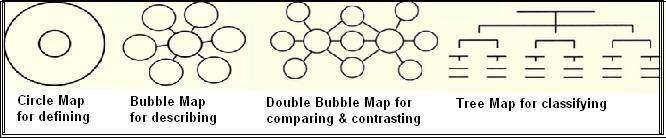
Examine the book before reading and complete a circle map for their "clue search" for this pre-reading, prediction activity. Put the book's title in the middle of the circle map and define the book with words and phrases that you have found through examining the following possible sources of hints:
Dedication
Title
Author
Cover illustration
Back cover/jacket
What others said
A quick glance at a few pages
In the frame of the circle map, write your predictions about the book.
Characterization Tree Map
Characterization is the process of conveying information about characters in a piece of fiction. Characters are usually presented through their actions, dialect, and thoughts, as well as by description. Characterization can regard a variety of aspects of a character, such as appearance, age, gender, educational level, vocation or occupation, financial status, marital status, social status, cultural background, hobbies, sexual orientation, religious beliefs, ambitions, motivations, personality, etc.
After reading one-fifth of your book, you should have a good idea of the development of the main character (or person of central focus in your non-fiction book). The author should be developing the main character – how he/she looks and acts. Complete a tree map using information from the first one-fifth of your book.
Four ways to learn about characters--Look carefully for quotations about the main character’s appearance and personality to collect on the tree map. Character development is done in four ways. The four branches of your tree map need to reflect the following four ways of character developement.
Narrator’s Description--The way the character is described by the narrator (what the author literally says about what a character is like);
Character’s words--what the character says to describe him/herself;
Character’s actions--what the character does (the actions and physical appearance of that character);
Other characters say--what other characters say or do to that character.
Cause/Effect Multi-Flow Map
Create a multi-flow map that analyzes the causes and effects of the central conflict in the book. The causes of the conflict are on the left, and the major effects of that conflict are on the right.
Double Bubble Comparison to Another Text
Using a double bubble map, compare and contrast your book, character or characters, events, issues, topics, motifs or theme to another book, movie, story, play or other work of literature.
--Jim Hatten, English 10
Each quarter, English 10 students select one book to read outside of class. Though somewhat structured, the purpose of the outside reading project is to help students develop into independent readers by allowing them to choose a topic or title that is of interest to them.
During the quarter, students are expected to demonstrate proficiency at comprehension, interpretation, and evaluation of reading.
In Quarter 3 of English 10, the category for the outside reading project is a book that has won a significant publishing award such as the ALA, Caldecott Medal, the Pulitzer Prize, the ALA Alex Awards, and many, many others.
A parent must approve the book chosen by the student and needs to sign the cover to this packet signifying their approval and understanding of the project. Students complete projects spread throughout the quarter and hand them in on time or ahead of time to receive full credit.
The following Thinking Map assignments are part of the independent study. The descriptions have been taken right from the student assignment packet.
Circle Map Clue Search
Examine the book before reading and complete a circle map for their "clue search" for this pre-reading, prediction activity. Put the book's title in the middle of the circle map and define the book with words and phrases that you have found through examining the following possible sources of hints:
Dedication
Title
Author
Cover illustration
Back cover/jacket
What others said
A quick glance at a few pages
In the frame of the circle map, write your predictions about the book.
Characterization Tree Map
Characterization is the process of conveying information about characters in a piece of fiction. Characters are usually presented through their actions, dialect, and thoughts, as well as by description. Characterization can regard a variety of aspects of a character, such as appearance, age, gender, educational level, vocation or occupation, financial status, marital status, social status, cultural background, hobbies, sexual orientation, religious beliefs, ambitions, motivations, personality, etc.
After reading one-fifth of your book, you should have a good idea of the development of the main character (or person of central focus in your non-fiction book). The author should be developing the main character – how he/she looks and acts. Complete a tree map using information from the first one-fifth of your book.
Four ways to learn about characters--Look carefully for quotations about the main character’s appearance and personality to collect on the tree map. Character development is done in four ways. The four branches of your tree map need to reflect the following four ways of character developement.
Narrator’s Description--The way the character is described by the narrator (what the author literally says about what a character is like);
Character’s words--what the character says to describe him/herself;
Character’s actions--what the character does (the actions and physical appearance of that character);
Other characters say--what other characters say or do to that character.
Cause/Effect Multi-Flow Map
Create a multi-flow map that analyzes the causes and effects of the central conflict in the book. The causes of the conflict are on the left, and the major effects of that conflict are on the right.
Double Bubble Comparison to Another Text
Using a double bubble map, compare and contrast your book, character or characters, events, issues, topics, motifs or theme to another book, movie, story, play or other work of literature.
--Jim Hatten, English 10
Tuesday, February 26, 2008
Organizing Writing
Sarah Burgess submitted the following information about recent NUA strategies in her classroom.
My English 10 students are working on analytical essays based on their reading of Julia Alvarez’s In the Time of the Butterflies. I differentiated the pre-writing process per my LINKS assignment this past month. After writing question papers and crafting thesis statements (that were differentiated per their ability levels), students were invited to select the type of outline they would most like to use. The choices included: a traditional written outline, an NUA thinking map (brace map), and a drawing for understanding outline (based on Linda Rief’s work).
Many students chose the brace map and completed their rough outlines of body paragraphs on large 11x17 sheets of paper. I was really pleased because those outlines are the easiest to share, and I was able to walk around with the thinking map outlines as models for other students.
Many students chose the brace map and completed their rough outlines of body paragraphs on large 11x17 sheets of paper. I was really pleased because those outlines are the easiest to share, and I was able to walk around with the thinking map outlines as models for other students.

In addition, I found that some students were using thinking maps as a brainstorming device before even beginning their outlines. Some were using bubble maps when trying to determine how they would characterize a particular sister. Others experimented with double bubble maps to compare two particular sisters in preparation for discussions of how they may have influenced each other.
One NUA strategy, “Read Draw Talk Write” technique, seems somewhat similar to the “drawing for understanding” outline that I have inserted below. Students have read the book, they are drawing their paper topics, they will talk me through the outline, and finally will write their papers.

I am also thinking about adding the 4-Square Writing graphic organizer as an outline option in the future. I like how this visual aid forces students to think about how their examples and supporting details relate to the topic.
--Sarah Burgess, English 10 Teacher
Subscribe to:
Posts (Atom)